
Norco Previous Residents by Era
Start with today's APN in Map My County. Search address, Norco community, or cross streets; save the parcel outline, legal clues, and nearby APNs. Then use Riverside County ACR Official Records to connect land to recorded parties. For previous residents, the APN holds the trail when a number or place name changes.
| Source | Years It Covers | Where Held | What It Shows |
|---|---|---|---|
| ACR official records | 1975-present | ACR web and office computers | Deeds, parties, dates, prior references |
| Gateway and Norco city files | 1964-1974 | Gateway Riverside and City Hall | Old deeds, permits, planning, code files |
| Assessor, GIS, and permits | 1964-present | ACR, Map My County, Norco departments | APN, land clues, structural change, applicants |
| Directories and newspapers | 1889-1966 / 1887-2003 | Heritage Room, Heritage Online, libraries | Households, reverse entries, dated notices |
| Census schedules | Through 1950 | National Archives and libraries | Household members and enumeration context |
| Orange Heights tract records | 1909-1920s | County books, local collections, papers | Farm lots, parent parcels, early households |
| Rancho La Sierra title sources | Before 1909 | County title series and archives | Pre-subdivision land identity |
Choose by era. For 1923-1966, pair directories and newspapers with deeds. Norco city records begin with December 1964 incorporation. ACR web and office search reaches 1975; 1974 and earlier requires Gateway Riverside. A deed records a transaction, a permit a project, and a directory a listing. A previous residents search still does not prove present occupancy.
Norco Deed Chain for Past Owners
To trace previous residents, pull the parcel in Map My County, then use ACR's Name, Document Number, Document Type, Map Type with Book and Page, or Advanced Search modes. Start with the latest vesting deed. Parcel, legal-description, and prior-number clues reject same-name transactions.
The Riverside County ACR official-record interface shows the index modes used to locate a recorded instrument before a copy is ordered.
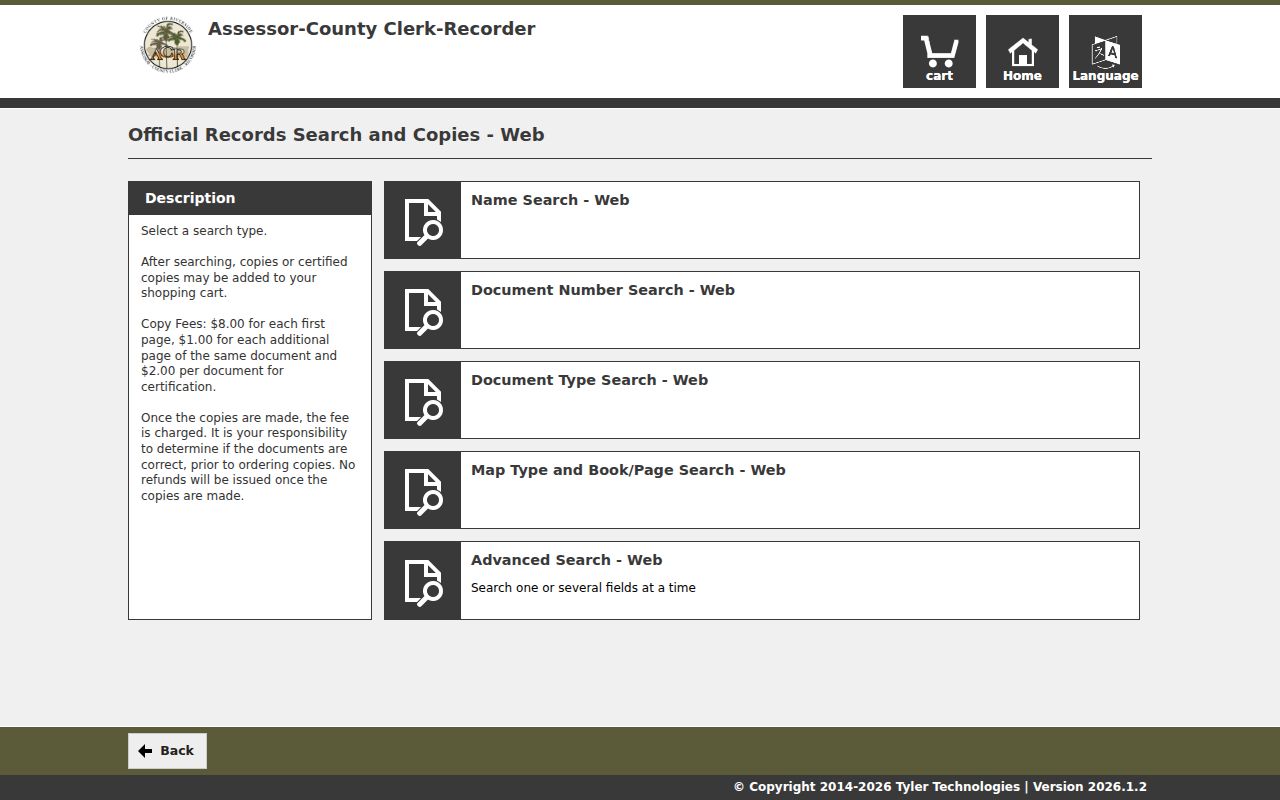
The capture is an index, not a free deed image. Order the instrument for the legal description, vesting language, and prior references.
- Save the vesting deed, APN, legal description, and grantee receiving the stated interest.
- Read prior instrument numbers in the deed and compare the description with Map My County.
- Search the earlier grantor as a grantee. Try spouse, married-name, trustee, trust, and entity variants.
- Repeat backward and record grantor, grantee, execution date, and recording date. Signing and recording differ.
- At 1974 or earlier, take the APN and legal clues to Gateway Riverside rather than treating an online gap as a missing owner.
- Grantor and grantee
- The grantor transfers or releases an interest; the grantee receives it in the recorded instrument.
- Chain of title
- The dated sequence of recorded interests connecting a current vesting deed to earlier instruments.
- Legal description
- Title wording that identifies land by tract, lot, book, page, or survey terms when a street number fails.
- Criss-cross directory
- A historical directory arranged by street and house number, often paired with a name section.
- Enumeration district
- A census area used by enumerators when a historic street name does not match modern Norco labels.
Norco Records After the First Deed
ACR copies are available online, in person, by mail, and through a drop box. Regular or certified copies cost $8 for the first page, $1 for each added page, and $2 for certification. An online card order adds 2.15%, and average online processing is 48 hours. In-person copies are usually same day unless the search is older or research-heavy. ACR recording services can be reached at (951) 486-7000.
Use the ACR copy instructions for the current request route. A mail request without a document number should include the instrument title or type, full party names, an estimated recording date, and useful APN clues. For pre-1976 records, a staff mail search is limited to two years after the estimated year. An NTE check is allowed when the total cost is unknown.
Address -> APN -> vesting deed -> prior instrument -> earlier grantee -> Gateway research.
Log the result URL, search date, exact name, role, document number, APN, and copy status. If dates differ, keep each one and check delayed recording, directory canvass, permit filing, renumbering, or namesakes.
Note: A precise recording year matters because a pre-1976 mail search is limited to two years.
Norco Permits and PAKA House Clues
Norco municipal records begin with incorporation in December 1964. Search the Norco Government Access Portal for packets, voting records, requests, and exhibits before asking a department. Building and Safety permits can date structural change and show the then-owner, applicant, contractor, scope, inspections, and final status. Planning files may add tract, parcel, legal-description, or notice material. Request code files by address and date; complaint identity and investigative material may be withheld.
City Clerk
2870 Clark Avenue
(951) 270-5623
Monday-Thursday, 8 a.m.-6 p.m.
CivicWeb or requests by address, APN, date, department, or permit number.
Building and Safety
(951) 270-5616
building@ci.norco.ca.us
Monday-Thursday, 10 a.m.-4 p.m.
Request a bounded permit or inspection search.
Planning
(951) 270-5661
planning@ci.norco.ca.us
Monday-Thursday, 10 a.m.-4 p.m.
Tract, parcel, variance, and notice files anchor an address.
Norco's Primary Animal Keeping Area covenant is a local recorded clue. Its form captures APN, owner names, legal description, exhibits, signatures, and future-owner language. A PAKA covenant runs with the land and explains an equestrian parcel's history, not every person who lived there.
Norco Past Households in Directories
The Corona Public Library Heritage Room holds Riverside City and County Directories from 1889-1966 on microfiche, selected Corona volumes, and regional newspapers. The Heritage Room collection notes identify reverse sections, death and marriage indexes, census material, and local databases. The collections are described on the Norco Directory Book page; an address-history search needs only the volumes and pages that test one household.
For previous residents, read the front matter before copying a name. An entry may include surname, given name or initials, spouse, occupation, home address, telephone, widow marker, and a cross-reference. When an address section is present, it lists streets and house numbers in order. Rural routes, unlisted subscribers, changing coverage, and a gap between numbers can reflect the edition rather than an empty parcel.
Use the Norco library branch for local routing and the Heritage Room for deeper holdings. Ancestry Library Edition and the Corona Newspaper Archive are in-library resources. Corona Heritage Online is the remote route for residences, photographs, maps, blueprints, artifacts, and yearbooks.
Pair Norco Directories With Census Years
A directory gives a listed household at a publication moment. A census gives a household as recorded by an enumerator. Pairing them can distinguish a namesake, show a move, and test whether a street number shifted. Federal census schedules are publicly available through 1950 under the 72-year release framework; the 1960 census is expected in 2032. Use the National Archives census research route or a library database.
- Capture the directory title, edition year, page, exact entry, address, spouse, and any abbreviation key.
- Choose the nearest 1920, 1930, 1940, or 1950 census year and note the enumeration district.
- Compare names, ages, relationships, and street wording, allowing for rural routes and household members absent from a directory.
- Check the next directory, a dated newspaper notice, and a deed or permit before calling the match secure.
The result is a dated historical household hypothesis. It is useful for genealogy and house history, but it does not establish that a person lives at the address now.
Norco Place Names Before Incorporation
Norco was not incorporated until December 1964. Earlier entries may use North Corona, Corona routes, Orange Heights, Orchard Heights, a ranch or subdivision name, or Rancho La Sierra, also called Sepulveda. Repeat each directory, newspaper, and deed search with the place vocabulary that fits its era. A 1915 household indexed under North Corona should not be discarded because a modern street search returns Norco.
For small or rural Norco, Sanborn coverage is unverified. Search the Library of Congress Sanborn collection under Corona, North Corona, and Riverside County without claiming that a Norco sheet exists. Fire-insurance mapping favored built-up areas, so an absence is plausible. Tract maps, deeds, newspapers, census schedules, and later permits are safer anchors for a rural address.
Note: Historical place names are search keys, not alternate proof that a past address sat inside today's city boundary.
Norco Vital, Probate, and Court Endpoints
When a household disappears, use an obituary, cemetery record, death index, vital copy, or probate file as a dated endpoint. The Heritage Room has death indexes for 1905-1939 and marriage indexes for 1960-1985. Riverside ACR issues local certificates; California Department of Public Health keeps the statewide series. Modern vital records have no general open name index, so copy type and eligibility matter.
Riverside County's certificate gateway is the local route for a known county event.
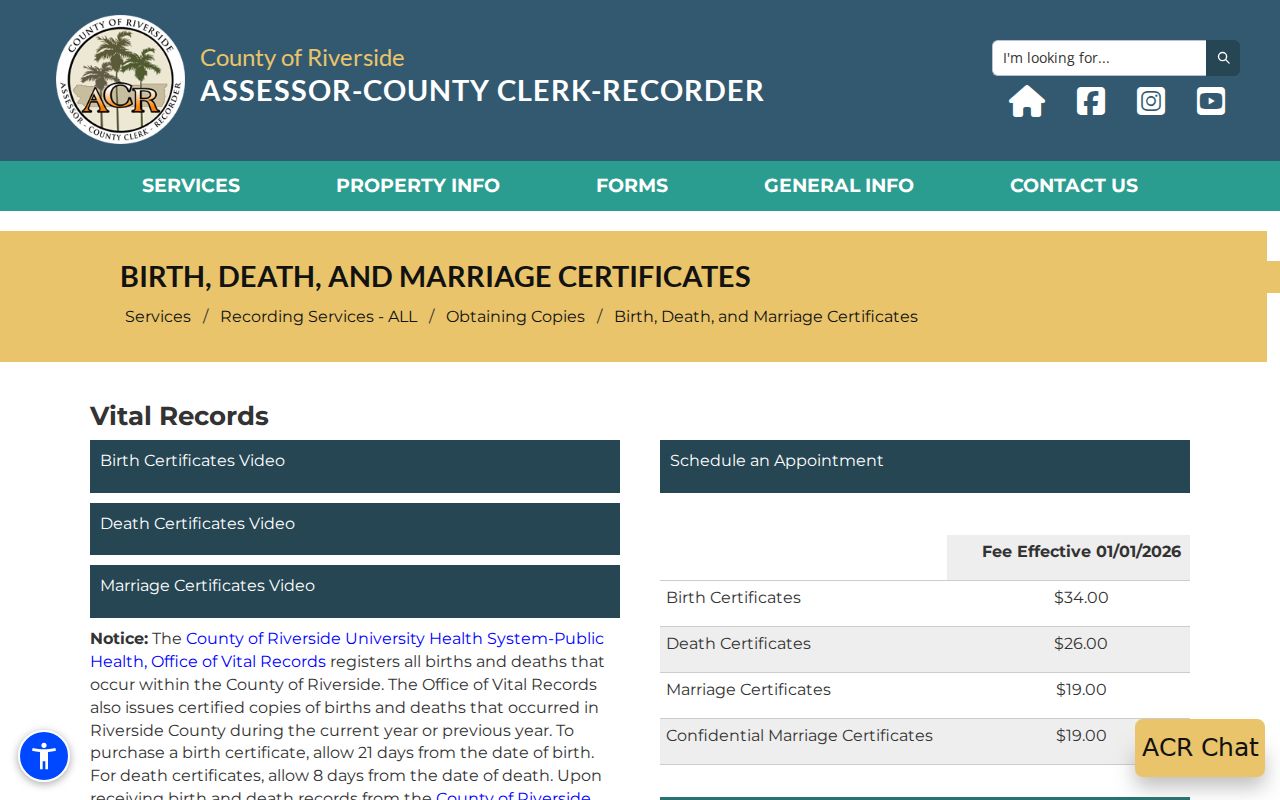
County forms ask for the registrant or decedent, event date and place, relationship or authority, payment, and any required sworn statement. Authorized and informational copies differ. Confidential marriage copies are limited to a party or court order.
California Department of Public Health Vital Records explains the statewide mail or electronic-vendor route.
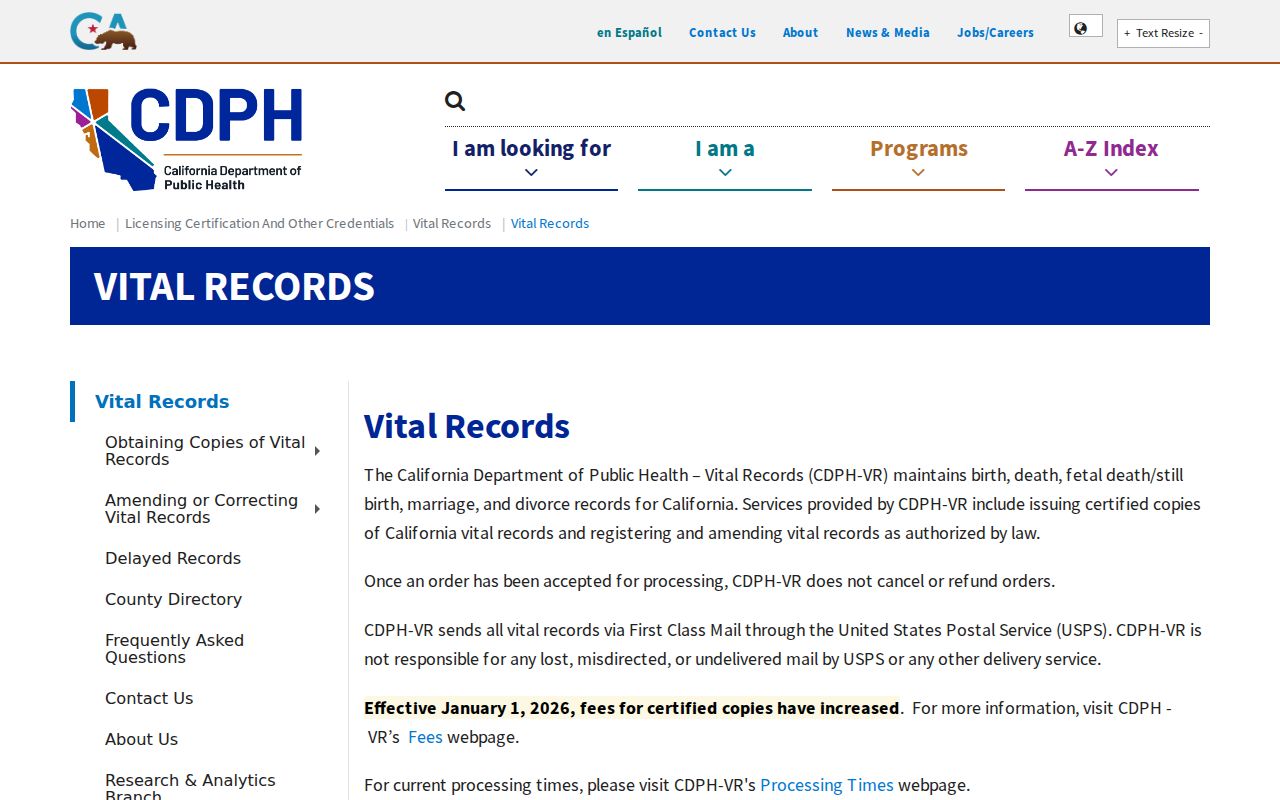
Use the image as a custodian check, not proof that a record is open. Pair an obituary with the actual certificate or probate file when the date matters.
Riverside Superior Court holds probate and other judicial files. Use a case number, clerk counter, or written copy request, and read the register and disposition. PACER is the federal route for a related federal case.
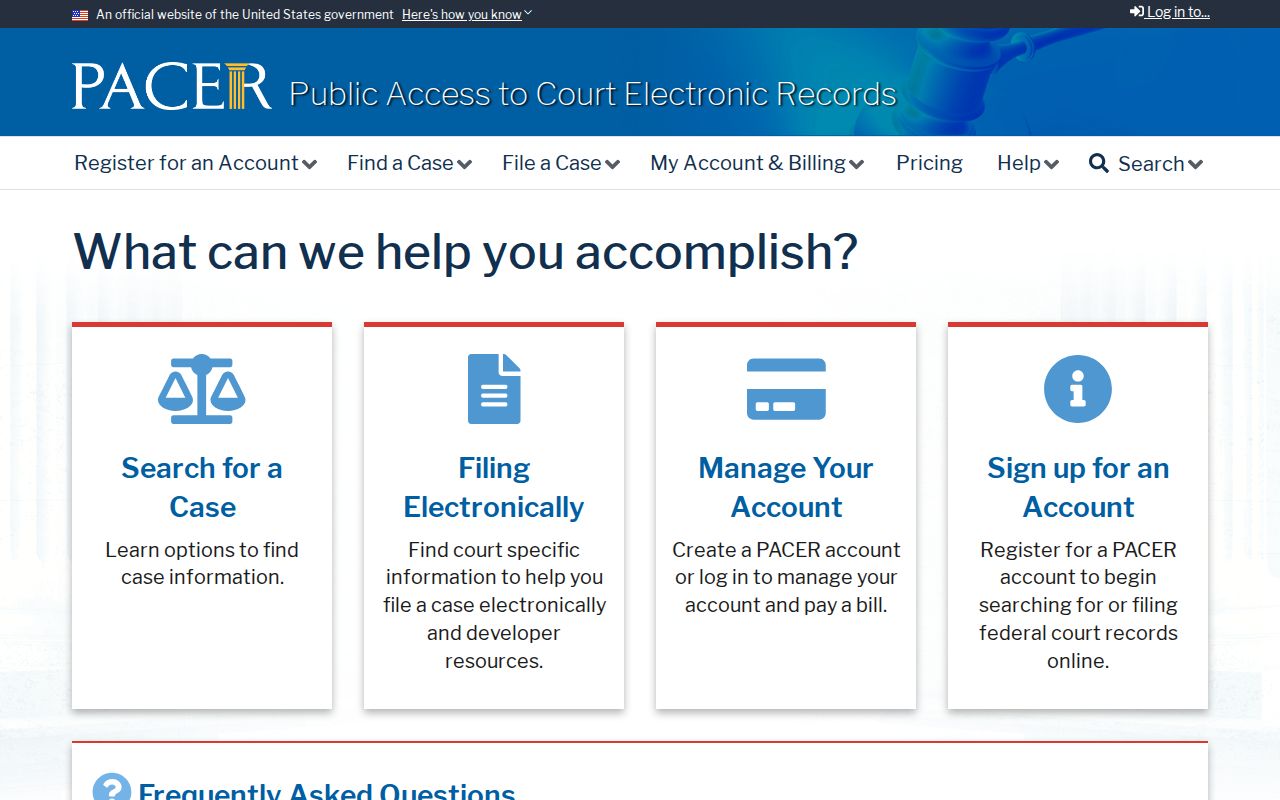
PACER is separate from Riverside records. A probate petition may name a decedent, heirs, dates, and property, but the final order controls.
Norco's 1909 Farm-Lot Story
House history predates street numbers. Orange Heights Tracts 1 and 2 were recorded in 1909 and 1910, with farm lots commonly around ten acres. Later subdivisions split parent parcels. That sequence explains why a current address may have no one-to-one match in an early directory, while a legal description can still connect the land.
Search a tract map or parent deed, then compare newspaper notices and census households. Norco's official history materials place North Corona and Orange Heights in the record vocabulary. It concerns land, not residents.
Privacy for Norco House History
House-history research supports genealogy, family reconnection, estate and heir work, property curiosity, and civic records review. Keep the evidence ladder visible: a recorded grantee is a dated title role, a directory entry is historical, a permit participant is tied to a project, and a mailing address is not proof of occupancy. No single source proves where a living person resides now.
Lawful house history. Norco records may be used for personal, lawful research, but California Penal Code section 646.9 and Code of Civil Procedure section 527.6 prohibit stalking and harassment. Treat Safe at Home and confidential-voter indicators as stop signals, and do not publish a compiled name-and-address trail to facilitate harm.
Use the minimum detail needed. Suppress full birth dates, signatures, account identifiers, minor or victim information, and protected addresses. When dates conflict, retain both assertions and investigate the gap.